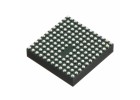
This guide focuses on the THS7318YZFR, an integrated circuit (IC) categorized as a video driver and specifically a reconstruction filter with integrated output drivers. Manufactured by Texas Instruments in a compact 9-ball DSBGA (Die-Size Ball Grid Array) package, this component is a critical building block in video signal chains. Its primary role is to take a digital-to-analog converted video signal, typically from a device like a DVD player, set-top box, or security camera encoder, and condition it for transmission over a standard analog cable, such as composite video (CVBS) or component video (Y/Pb/Pr). The IC performs two essential functions: it applies a low-pass reconstruction filter to smooth the stepped analog waveform and remove high-frequency sampling artifacts, and it provides a 75-ohm line driver to match the impedance of the coaxial cable, ensuring signal integrity over distances.
When choosing this type of component, several key parameters must be evaluated to ensure compatibility with the specific application. The number of channels is paramount; the THS7318YZFR is a triple-channel driver, making it ideal for component video (Y, Pb, Pr) or three separate composite video streams. The filter cutoff frequency is another critical spec, with this part offering a fixed 9.5 MHz or 8 MHz selectable filter, optimized for standard definition (SD) video formats like NTSC and PAL. Output drive capability must be sufficient to drive a standard 75-ohm load, which this IC provides with integrated gain of 6 dB (2 V/V) to compensate for the loss in the cable. Power supply voltage range and quiescent current are also vital, as the THS7318 operates from a single 2.5V to 5.5V supply with a low 16 mA typical current, making it suitable for battery-powered or low-power systems. Finally, the package size is a major consideration; the 9DSBGA (1.6 mm x 1.6 mm) is extremely small, but requires specialized assembly processes.
Comparing the THS7318YZFR to alternatives reveals clear trade-offs in performance, cost, and availability. One common alternative is the ADA4432-1 from Analog Devices, a single-channel SD video filter and driver. The THS7318 offers a significant advantage in channel count, integrating three channels in one package versus needing three separate ADA4432-1 ICs, which saves board space and reduces bill-of-materials (BOM) complexity. However, the ADA4432-1 may offer slightly lower distortion specifications for high-end broadcast applications. In terms of cost, the THS7318 is generally more economical per channel than using multiple single-channel parts. Another alternative is the MAX7450 from Maxim Integrated, which also provides dual or triple channels with similar filter characteristics. The THS7318 often has a lower supply voltage requirement (down to 2.5V) compared to some older alternatives, which is advantageous for modern low-voltage designs. Availability is generally good for the THS7318 due to Texas Instruments’ strong production capacity and long product lifecycle support, though the DSBGA package can limit second-source options as it is a proprietary TI package. Performance-wise, the THS7318 delivers a clean, low-noise output with excellent differential gain and phase, meeting stringent SD video specifications.
Industry trends are significantly affecting this component category. The most prominent is the transition from analog to digital video interfaces, such as HDMI and DisplayPort. This shift is reducing the volume of discrete analog video drivers in consumer electronics like TVs and Blu-ray players. However, demand remains robust in legacy and industrial applications, including security camera systems (CCTV), automotive rear-view cameras, medical imaging equipment, and industrial video capture cards. Another trend is the push for miniaturization, driving adoption of wafer-level packages like the 9DSBGA. This allows designers to incorporate video output capability into increasingly compact devices, such as action cameras or portable test equipment. Additionally, the need for low power consumption is a persistent trend, with ICs like the THS7318 featuring power-down modes to conserve battery life in portable applications. The integration of additional functions, such as integrated clamping or sync-tip detection, is also becoming more common to further simplify designs.
You should choose the THS7318YZFR over alternatives when your design requires a triple-channel SD video driver in an ultra-compact form factor. It is the ideal choice for space-constrained applications like handheld security monitors, portable video testers, or embedded camera modules. If your system operates on a low supply voltage (e.g., 3.3V or 2.5V) and you need to drive three separate video signals without using multiple ICs, this part is highly efficient. It is also a strong choice when design simplicity is paramount, as the internal filter and fixed gain eliminate the need for external components like resistors or inductors for filter tuning. Conversely, if you need a single-channel driver for a cost-sensitive, high-volume product, a simpler single-channel part may be cheaper. For high-definition (HD) video standards like 1080p or component video with higher bandwidth, you would need a different driver, such as the THS7327, with a higher cutoff frequency (e.g., 30 MHz).
From a procurement perspective, several considerations are critical. The lead time for the THS7318YZFR is typically in the range of 8 to 16 weeks from Texas Instruments, though this can fluctuate based on global semiconductor demand and supply chain constraints. It is advisable to check current lead times directly with the distributor. The lifecycle status is active for this part, indicating TI has no current plans for obsolescence, and it is supported for new designs. However, always verify the latest PDN (Product Discontinuation Notice) on the manufacturer’s website. Second-source options are limited because the 9DSBGA package is a Texas Instruments-specific footprint. Competitors like Analog Devices or Maxim offer parts with similar electrical performance (e.g., the ADA4432-1 or MAX7450), but they come in different packages (typically SOIC, TSSOP, or QFN), which would require a PCB layout change. This lack of a direct drop-in replacement means that a redesign would be necessary if a second source is required. Consequently, it is prudent to secure long-term supply agreements or maintain adequate safety stock for the THS7318YZFR, especially for products with extended production life. The ultra-small package also necessitates careful planning for assembly, as DSBGA packages require precise pick-and-place equipment and underfill may be necessary for high-reliability applications.