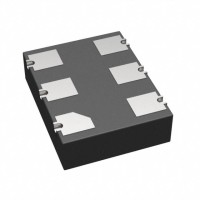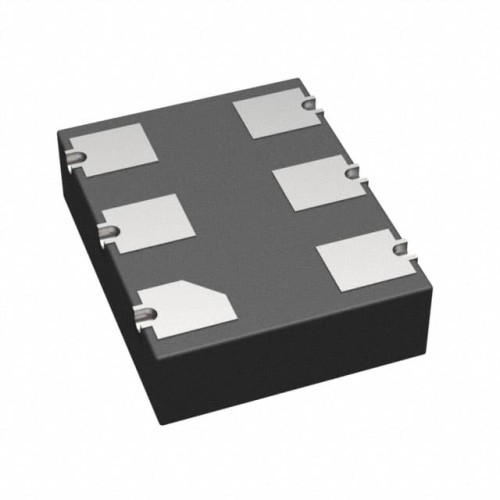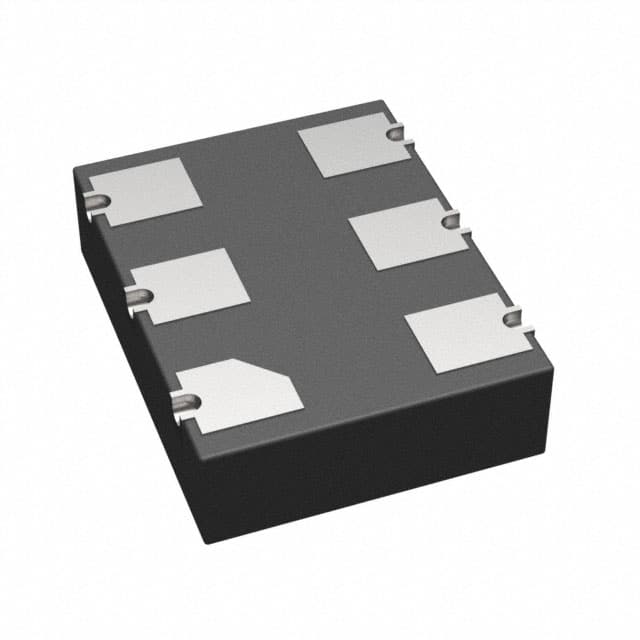
This guide focuses on a specific, high-performance timing component: the MEMS OSC XO 133.333333MHZ LVDS, branded by SiTime with the SKU SIT9365AC-2B3-33N133.333333. Understanding its role, parameters, and market position is critical for making informed procurement decisions in high-speed digital systems.
This component belongs to the category of oscillators, specifically a Micro-Electromechanical Systems (MEMS) oscillator. Its role in electronic systems is to provide a precise, stable clock signal that synchronizes the operation of digital circuits. The "XO" designation indicates it is a crystal oscillator, but in this case, the resonator is a silicon MEMS structure rather than a quartz crystal. The output is LVDS (Low-Voltage Differential Signaling), which is a high-speed, low-noise signaling standard ideal for driving clock inputs on FPGAs, ASICs, and high-speed data converters. The specific frequency of 133.333333 MHz is commonly used in networking, telecommunications, and video processing applications where precise data rate generation is required.
When selecting a MEMS oscillator like the SIT9365AC-2B3-33N133.333333, several key parameters must be evaluated. Frequency stability is paramount; this part typically offers stability as tight as ±10 ppm or ±25 ppm over temperature and aging, which is comparable to many quartz oscillators. Phase jitter is another critical metric, especially for high-speed serial links; MEMS oscillators have improved dramatically, with typical integrated phase jitter (12 kHz to 20 MHz) below 1 ps RMS. Supply voltage is specified as 3.3V in the SKU (the "33N" indicates 3.3V nominal). Operating temperature range is also vital—this part is designed for industrial ranges, often -40°C to +85°C or wider. Finally, output logic type (LVDS) determines compatibility with downstream devices and influences power consumption and signal integrity.
Comparing this MEMS oscillator to traditional quartz crystal oscillators reveals several trade-offs. In terms of performance, modern MEMS oscillators from SiTime now match or exceed quartz in frequency stability and phase jitter for most applications. They offer superior reliability because they are immune to mechanical shock and vibration, a significant advantage over quartz crystals which can fracture. Cost is a nuanced factor: MEMS oscillators have historically been slightly more expensive than basic quartz oscillators, but volume pricing has narrowed the gap. For high-performance variants like this LVDS output part, the cost differential is often negligible or even favorable for MEMS. Availability is a major advantage for MEMS: SiTime manufactures these on standard semiconductor processes, leading to lead times of 4-8 weeks versus 8-16 weeks for many quartz oscillators, especially those with custom frequencies or tight stabilities. However, for ultra-low jitter requirements below 100 fs RMS, some high-end quartz oscillators (e.g., OCXOs) still hold an edge, though at significantly higher cost.
Several industry trends are shaping this component category. The shift toward MEMS timing is accelerating as system designers demand smaller footprints, higher reliability, and faster time-to-market. SiTime’s MEMS oscillators are increasingly found in 5G infrastructure, data centers, and automotive electronics where vibration and temperature extremes are common. Another trend is the integration of multiple outputs and programmable frequencies, but this specific part is a single-output oscillator. The move to lower supply voltages (1.8V, 2.5V) for power-sensitive designs is also influencing new product developments. Additionally, the global supply chain fragility highlighted by semiconductor shortages has made the shorter, more predictable lead times of MEMS oscillators a strategic procurement advantage.
You should choose this specific SiTime SIT9365AC-2B3-33N133.333333 over alternatives when several conditions are met. First, if your system requires a 133.333333 MHz clock with LVDS output—this is a niche but precise frequency. Second, if your design demands high reliability in harsh environments, such as industrial automation, avionics, or outdoor telecom equipment, where vibration and temperature cycling are concerns. Third, if you need fast prototyping or production ramp-up, as the short lead times of MEMS allow for agile procurement. Fourth, if you are minimizing board space, as MEMS oscillators are available in small packages (e.g., 3.2 x 2.5 mm) without compromising performance. Conversely, if your application is a cost-sensitive consumer device with standard frequencies (e.g., 25 MHz or 100 MHz) and benign operating conditions, a basic quartz oscillator may be more economical. Also, if you need an oscillator with an extremely wide pull range for VCXO applications, quartz typically offers better linearity.
From a procurement perspective, several factors require attention. The lead time for the SIT9365AC-2B3-33N133.333333 is typically 6-8 weeks from SiTime’s distributors, though this can vary with global demand. It is advisable to check the current lifecycle status; SiTime lists this product as "Active" and not nearing end-of-life, as the SIT9365 family is a mainstream offering. However, always verify with the manufacturer or distributor for any obsolescence notices. Second-source options are limited but exist. Competitors like Microchip (formerly Microsemi) and Epson offer MEMS oscillators, but they may not be pin-for-pin compatible with SiTime’s specific footprint and configuration. For critical designs, consider using a cross-reference tool provided by your distributor or contact SiTime directly for recommended alternatives. Given SiTime’s dominant market share in MEMS timing, stocking a small buffer inventory or using an authorized distributor with a flexible supply agreement is a prudent procurement strategy to mitigate supply risks. Always request production data sheets and qualification reports to confirm the part meets your system’s environmental and reliability requirements before finalizing the BOM.