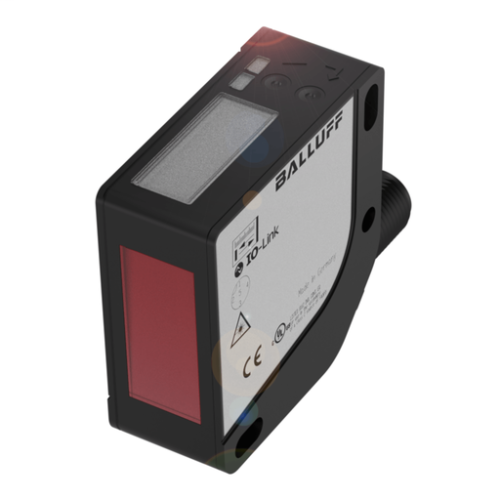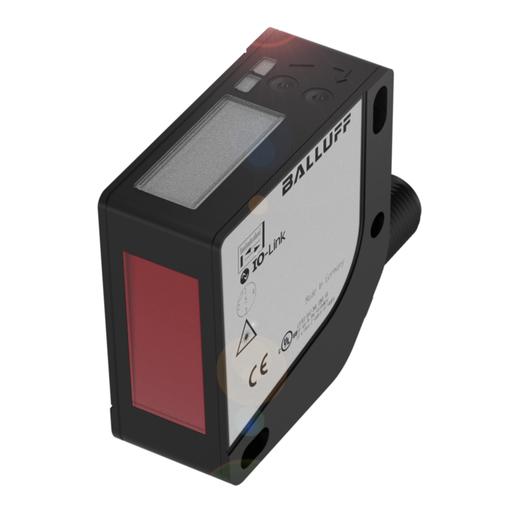
When evaluating the Balluff BOD 24K-LB03-S92 photoelectric sensor for professional procurement, reliability and quality assurance are paramount for automation and control systems. This component, a diffuse-type photoelectric sensor with a background suppression function, is designed for precise object detection in industrial environments. Its reliability hinges on adherence to stringent standards, rigorous testing, and proactive management throughout its lifecycle.
Reliability standards and qualifications relevant to this component are essential for ensuring consistent performance. The Balluff BOD 24K-LB03-S92 is typically qualified under IEC 60947-5-2, the international standard for proximity and photoelectric sensors in control circuit devices. This standard outlines requirements for electrical endurance, dielectric strength, and electromagnetic compatibility (EMC). Additionally, the sensor should meet IP67 ingress protection per IEC 60529, confirming resistance to dust and temporary water immersion. For industrial applications, compliance with CE marking and UL 508 (industrial control equipment) is often required. These qualifications provide a baseline for reliability in harsh factory floor conditions, including temperature extremes and electrical noise.
Accelerated life testing and what the results mean are critical for predicting long-term reliability. For this photoelectric sensor, typical accelerated life tests involve elevated temperature (e.g., 85°C), high humidity (85% RH), and cyclic thermal shock (e.g., -40°C to +85°C). These conditions accelerate failure mechanisms such as LED degradation, solder joint fatigue, and seal deterioration. Results are analyzed using the Arrhenius model to estimate activation energy (Ea), commonly around 0.7 eV for optoelectronic components. A successful test might show no failures after 1,000 hours at 85°C, translating to an estimated lifetime of over 10 years at 40°C ambient. The key takeaway is that accelerated testing validates the sensor's robustness against thermal and humidity stresses, directly impacting field reliability.
Failure rate calculations (FIT rates) and MTBF considerations provide quantifiable reliability metrics. For the Balluff BOD 24K-LB03-S92, failure in time (FIT) rates are typically calculated using Telcordia SR-332 or MIL-HDBK-217F methodologies. Based on the component's bill of materials (LED, photodiode, amplifier IC, and passive components), a typical FIT rate for a high-quality photoelectric sensor ranges from 50 to 150 FITs (failures per 10^9 hours). Mean time between failures (MTBF) is then calculated as 1/λ (where λ is the failure rate in failures per hour). At 100 FITs, MTBF is 10,000,000 hours (approximately 1,141 years). However, this is a statistical estimate under ideal conditions; actual field MTBF is lower due to environmental factors like vibration and contamination. Procurement professionals should request the manufacturer's MTBF report, which often includes a 60% confidence level, and consider it a comparative tool rather than an absolute guarantee.
Environmental stress screening and burn-in procedures are vital for eliminating infant mortality failures. For this sensor, a recommended burn-in procedure involves powering the device for 48 to 168 hours at its maximum rated temperature (e.g., 55°C) while cycling the output on and off. This stresses weak solder joints, semiconductor junctions, and optical components. Environmental stress screening (ESS) may also include random vibration (5-500 Hz at 2g) and rapid thermal cycling (-20°C to +60°C) for 10-20 cycles. After screening, functional tests verify detection range, hysteresis, and background suppression accuracy. These procedures are not mandatory for all procurement lots but are strongly advised for mission-critical applications, as they can reduce field failure rates by up to 80% during the first year of operation.
Counterfeit detection methods specific to this component type are crucial given the prevalence of fake industrial sensors. For the Balluff BOD 24K-LB03-S92, key detection techniques include visual inspection of the housing for irregularities in laser marking, font spacing, and logo alignment. Genuine Balluff sensors have a distinct, consistent surface finish and precise labeling. X-ray fluorescence (XRF) analysis can verify lead-free solder composition and detect unauthorized substitutions. Electrical testing involves measuring the sensor's switching frequency (typically 500 Hz for this model) and output current at the rated voltage; counterfeits often show deviations. Additionally, querying Balluff's online serial number database or requesting Certificate of Conformance (CoC) from authorized distributors is essential. Be wary of excessively low pricing or unusual packaging, such as missing anti-static bags or incorrect revision labels.
Incoming inspection best practices ensure that each unit meets specifications before installation. For this photoelectric sensor, a structured inspection protocol should include visual examination for physical damage, such as cracked lenses, bent pins, or deformed housing. Dimensional checks using calipers verify the M18 threaded barrel length (typically 50-60 mm) and sensing face diameter. Functional testing in a controlled environment includes verifying the sensing range (e.g., 200 mm for the BOD 24K-LB03-S92) against a standard white target (90% reflectance), checking the background suppression performance by placing a dark object at the stated cutoff distance, and measuring the output voltage drop under load (e.g., <1.5V at 100 mA). Electrical safety checks, such as insulation resistance between supply and output terminals (minimum 20 MΩ at 500V DC), are also recommended. Document all results for traceability.
Storage and handling requirements to maintain reliability are often overlooked but critical. The Balluff BOD 24K-LB03-S92 should be stored in its original anti-static packaging at temperatures between -20°C and +70°C, with relative humidity below 85% non-condensing. Avoid exposure to direct sunlight, corrosive gases, or strong magnetic fields. During handling, use ESD-safe tools and wrist straps, as the sensor contains sensitive CMOS electronics. The lens must never be touched with bare fingers; use lint-free wipes and isopropyl alcohol for cleaning if needed. For long-term storage exceeding one year, periodic functional testing every six months is advised to detect latent defects, such as LED degradation. Proper handling prevents mechanical damage to the lens and cable, which can lead to false triggering or complete failure in the field.
End-of-life management and obsolescence planning requires proactive strategies for the BOD 24K-LB03-S92. Balluff typically provides a last-time-buy (LTB) notice 12-18 months before discontinuation. Procurement teams should maintain a minimum stock buffer based on historical consumption and lead times (often 8-12 weeks). For critical systems, identify a drop-in replacement with identical form, fit, and function, such as the BOD 24K-LB03-S92C (with updated electronics). Alternatively, design-in a pin-to-pin compatible sensor from Balluff’s current catalog. If the sensor is used in a legacy system, consider a lifetime buy for the remaining expected service life (e.g., 10 years), plus 20% for spares. Maintain a relationship with an authorized distributor for up-to-date obsolescence alerts and consider a technology refresh every 5-7 years to align with Balluff’s product evolution. This planning minimizes downtime and prevents costly redesigns.
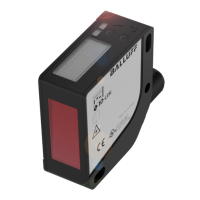
Automation & Control,Sensors & Switches,Photoelectric Sensors
Balluff | BOD 24K-LB03-S92 | $14.99