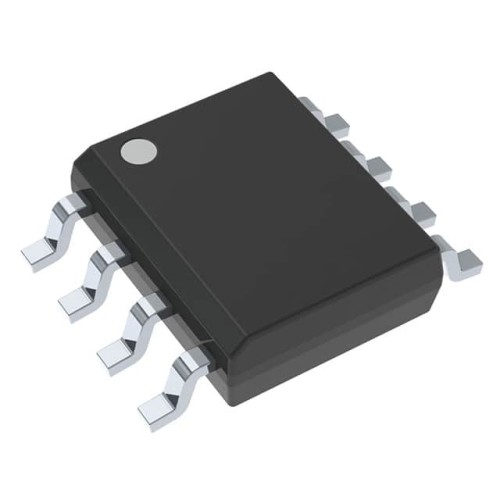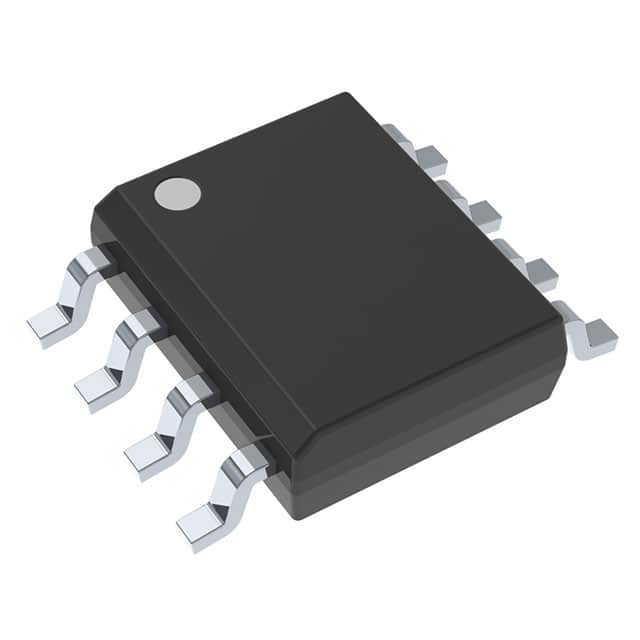
The Texas Instruments INA105KU, a precision differential operational amplifier in an 8-pin SOIC package, demands a rigorous reliability and quality assurance approach for professional procurement. This guide addresses the critical areas for ensuring long-term performance in your application.
Reliability Standards and Qualifications: The INA105KU, as a Texas Instruments component, is manufactured under stringent quality management systems, typically certified to ISO 9001 and often to automotive-grade standards like IATF 16949 for certain product lines. The component itself is qualified per industry standard JEDEC documents. Specifically, it undergoes qualification testing per JESD47, which covers accelerated life testing, temperature cycling, moisture resistance, and electrostatic discharge (ESD) sensitivity. The SOIC package is qualified to JEDEC standards for moisture sensitivity level (MSL), which is critical for proper handling. Always verify the specific qualification report from Texas Instruments for the INA105KU, as it confirms compliance with these standards and provides the exact MSL rating, typically MSL-1 for this part.
Accelerated Life Testing and Results Interpretation: Manufacturers use accelerated life testing (ALT) to predict long-term reliability. For the INA105KU, this involves operating devices at elevated temperatures and voltages (e.g., 125°C or 150°C) for extended periods. The results are modeled using the Arrhenius equation to estimate failure rates at normal operating conditions. Key parameters include the activation energy (Ea), typically assumed at 0.7 eV for integrated circuits, and the acceleration factor. A successful ALT with zero failures over a certain number of device-hours, such as 1,000 hours at 125°C, provides confidence in a low failure rate, often expressed in FIT (Failures In Time) per billion device-hours. These results underpin the datasheet reliability data and are used to calculate the component's useful life under specified conditions.
Failure Rate Calculations (FIT Rates) and MTBF Considerations: For the INA105KU, FIT rates are derived from field data and accelerated testing. A typical FIT rate for a precision op-amp like this is in the single digits to low tens, such as 5 to 20 FIT. This translates to a Mean Time Between Failures (MTBF) of 50,000,000 to 200,000,000 hours. However, MTBF is a statistical prediction for a population, not a guarantee for a single unit. It is heavily influenced by operating temperature, voltage stress, and environmental conditions. Derating the device—operating it below its maximum ratings, such as using a supply voltage below the absolute maximum—significantly improves FIT and MTBF. Always use the manufacturer's reliability report for the most accurate, application-specific FIT data, as generic calculators may overestimate failure rates.
Environmental Stress Screening and Burn-In Procedures: Burn-in is a stress test applied to weed out infant mortality failures. For the INA105KU, a typical burn-in procedure involves operating the device at elevated temperature (e.g., 125°C) under nominal or slightly elevated voltage for 48 to 168 hours. This accelerates failure modes like oxide breakdown, wire bond defects, or contamination issues. Environmental stress screening (ESS) may include temperature cycling (e.g., -40°C to +125°C for 10 cycles) and vibration to expose mechanical weaknesses. For professional procurement, you may request burn-in from your distributor or perform it in-house if your application is critical. Ensure the screening conditions do not exceed the absolute maximum ratings in the datasheet to avoid introducing damage.
Counterfeit Detection Methods Specific to This Component: The INA105KU is a target for counterfeiting due to its precision analog nature. Detection methods include: Visual Inspection: Compare marking font, logo, and surface finish against authentic TI parts. Check for laser marking irregularities, sanded surfaces, or misspellings. X-Ray Analysis: Examine the internal die and bond wire configuration. The INA105KU's die should match a known reference, and bond wires should be consistent in count and placement. Electrical Testing: Measure key parameters like input offset voltage, quiescent current, and common-mode rejection ratio (CMRR) at room temperature and over a temperature range. Counterfeits often fail these tests or show significant drift. Scanning Acoustic Microscopy (SAM): Detects internal delamination or voids in the plastic package, which are common in low-quality fakes. Always procure from authorized distributors like DigiKey, Mouser, or directly from TI to minimize risk.
Incoming Inspection Best Practices: Upon receipt of INA105KU units, implement a robust incoming inspection. Start with a visual inspection of the reel or tube for damage, and verify the date code and lot number match the packing slip. Perform electrical testing on a statistical sample per AQL (Acceptable Quality Level) standards, such as AQL 0.65 or 1.0, using a precision test setup that measures critical parameters like offset voltage, bias current, and gain. For high-reliability applications, consider 100% testing. Moisture sensitivity verification is critical; if the MSL label indicates a floor life has been exceeded, baking per IPC/JEDEC J-STD-033 is required. Document all results and maintain traceability.
Storage and Handling Requirements to Maintain Reliability: The INA105KU must be stored in a dry, temperature-controlled environment (typically 15-35°C and <60% relative humidity). The SOIC package is sensitive to moisture; adhere to the MSL rating. Handling precautions include using grounded ESD-safe workstations, wrist straps, and conductive packaging. Avoid bending leads or applying excessive force during soldering. For soldering, follow TI's recommended reflow profile, ensuring peak temperature does not exceed 260°C for 10 seconds maximum. After soldering, allow the board to cool gradually to prevent thermal shock. If the devices have been exposed to humidity beyond the floor life, bake them at 125°C for 24 hours before use.
End-of-Life Management and Obsolescence Planning: The INA105KU, while a well-established part, may eventually face obsolescence. Proactive planning includes monitoring TI's product lifecycle notifications and subscribing to their PCN (Product Change Notification) alerts. Maintain a last-time buy (LTB) strategy by purchasing sufficient stock to cover your production needs for the expected remaining lifespan of your product. Identify a drop-in replacement or a pin-compatible alternative from TI or other manufacturers, such as the INA105KP (DIP package) or a newer precision op-amp like the OPAx192 series, which may offer better performance. For long-term support, consider contacting TI for a custom lifetime buy or engage a franchise distributor to manage end-of-life inventory. Document the obsolescence impact in your Bill of Materials (BOM) and plan for a qualification cycle if a substitute is required.