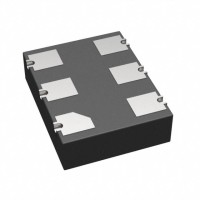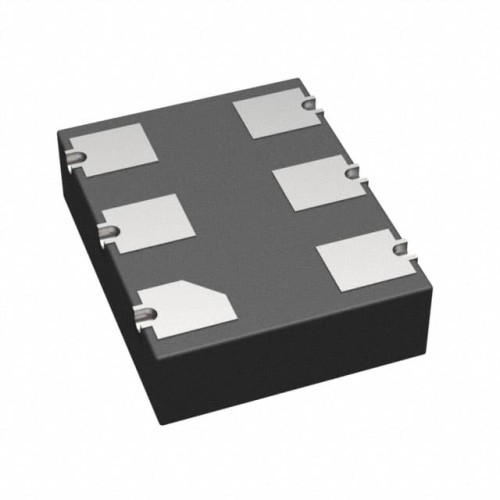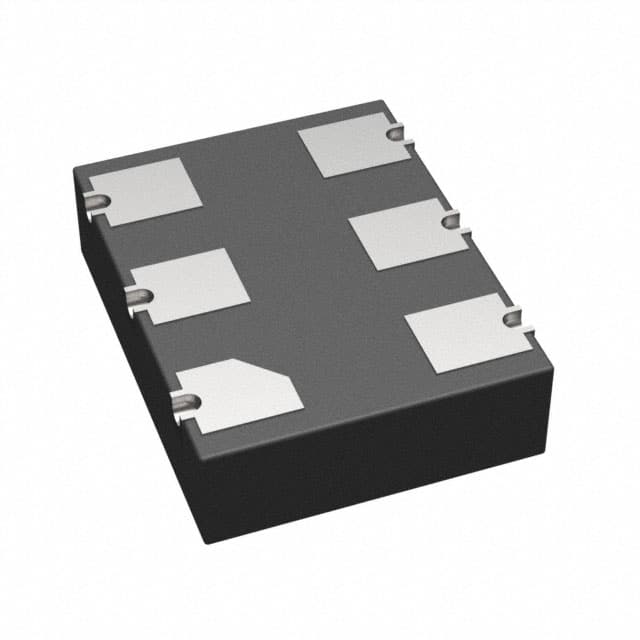
This guide focuses on a specific, high-performance timing component: the MEMS OSC VCXO 345.6000MHZ HCSL, with the SiTime SKU SIT3373AC-4B3-25NG345.600000. This component belongs to the category of MEMS-based Voltage-Controlled Crystal Oscillators (VCXOs). Its primary role in electronic systems is to provide a precise, stable, and tunable clock signal. Unlike a standard oscillator, a VCXO allows for fine frequency adjustments via an applied voltage, making it indispensable in phase-locked loops (PLLs), frequency synthesis, and jitter attenuation applications. The 345.600 MHz frequency is particularly common in high-speed networking, data center switches, and test and measurement equipment where precise clocking is critical for data integrity and synchronization.
When selecting a component of this type, several key parameters demand careful evaluation. The first is frequency stability, typically measured in parts per million (ppm) over temperature, supply voltage, and load variations. For this SiTime part, stability is a core specification. Next, phase jitter is paramount, especially in high-speed digital systems where excessive jitter can cause bit errors. The control voltage range and absolute pull range (APR) define how much the frequency can be adjusted, which is crucial for lock range in a PLL. The output logic type, here HCSL (High-Speed Current Steering Logic), is another critical parameter. HCSL is prevalent in PCIe, SATA, and networking interfaces due to its low voltage swing and differential signaling. Finally, supply voltage (2.5V in this SKU), operating temperature range, and package size are practical constraints that influence design compatibility.
Comparing this MEMS-based VCXO to traditional quartz-based alternatives reveals distinct trade-offs. Performance: MEMS oscillators have historically lagged behind quartz in terms of phase noise and jitter at very high frequencies, but advanced MEMS designs have closed this gap significantly. The SiTime part offers competitive jitter performance suitable for most high-speed serial links. Quartz VCXOs can still achieve superior near-carrier phase noise, which is critical in some RF applications. Cost: MEMS oscillators generally offer a lower bill of materials cost due to their silicon-based fabrication, which is more scalable than quartz crystal processing. However, for niche, high-precision quartz VCXOs, the cost can be higher. Availability: This is where MEMS parts have a clear advantage. SiTime’s MEMS technology uses standard semiconductor manufacturing and packaging, leading to significantly shorter lead times and better supply chain resilience compared to quartz crystals, which are subject to longer lead times and periodic shortages. The SIT3373 series benefits from this manufacturing agility.
Industry trends are strongly favoring MEMS-based timing solutions. The shift towards miniaturization and lower power consumption in portable and embedded systems aligns with the small footprint of MEMS packages. Furthermore, the trend of programmable oscillators is a major disruptor. SiTime’s MEMS-first platform allows a single device to be programmed for multiple frequencies, supply voltages, and output types, reducing inventory complexity. The growing demand for higher data rates (e.g., 400G/800G Ethernet) and stricter timing requirements in 5G infrastructure are pushing component suppliers to deliver lower jitter and wider pull ranges. MEMS technology is rapidly evolving to meet these demands, often with better reliability and shock resistance than quartz.
You should choose this specific SiTime MEMS VCXO, the SIT3373AC-4B3-25NG345.600000, over alternatives when programmability, short lead times, and supply chain stability are high priorities. If your design requires a 345.6 MHz HCSL clock with moderate pull range and you are operating in a standard commercial or industrial temperature range, this part is an excellent fit. It is particularly well-suited for high-volume production where quartz availability might be a bottleneck. Another compelling scenario is when your design uses multiple frequencies; a single MEMS oscillator family can be programmed to cover them, simplifying procurement. However, if your application demands ultra-low phase noise near the carrier (e.g., for radar or high-end RF converters), a premium quartz VCXO may still be necessary. For most high-speed digital and communications equipment, the MEMS alternative offers a compelling balance of performance and logistics.
From a procurement perspective, several factors are critical. Lead times for the SiTime SIT3373 series are typically 8 to 12 weeks, which is far shorter than the 16 to 20 weeks common for many quartz VCXOs. This is a significant advantage for managing production schedules. The lifecycle status is generally active, as MEMS oscillators are a growing category with strong manufacturer support. SiTime is the dominant player in this space, but it is important to note that second-source options are limited. While other MEMS oscillator manufacturers exist, pin-to-pin compatible alternatives from a different vendor are rare. This creates a sole-source risk. To mitigate this, buyers should secure long-term supply agreements, build safety stock, and engage with SiTime’s authorized distributors. The packaging is standard, and the part is RoHS compliant. Overall, for a design where performance meets the specification, this MEMS VCXO offers a strong procurement advantage in terms of availability and lead time, offset by the need for careful supply chain management due to limited second-sourcing.