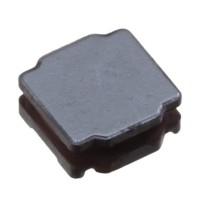
In the ever-shrinking world of electronics, the humble fixed inductor remains a critical, often unsung, hero. The Murata LQH5BPB1R0NT0L, a 1µH, 3.1A, 22.8 mOhm surface-mount device, is a prime example of how this component category is evolving to meet the demands of modern, power-hungry systems. For procurement teams and design engineers, understanding the forces shaping this specific segment is no longer optional; it is strategic necessity.
The Technology: Power Density in a Compact Package
The LQH5BPB1R0NT0L is not just any inductor; it is a product of advanced materials science. Murata’s proprietary ferrite material and winding technology allow for a high saturation current (3.1A) and low DC resistance (22.8 mOhm) in a compact 5.0x5.0x4.5mm package. This specific component belongs to the LQH5BP series, which utilizes a wire-wound structure encased in a magnetic resin core. This design minimizes magnetic flux leakage, reduces acoustic noise, and improves thermal dissipation. Recent innovations in this space focus on fine-tuning the ferrite composition to achieve higher permeability at higher frequencies, enabling smaller footprints without sacrificing current handling. The trend is clear: the industry is moving toward inductors that can handle the transient response of high-performance processors and DC-DC converters while generating less heat and occupying less board space.
Market Trends: The Twin Engines of Miniaturization and Power
Demand for components like the LQH5BPB1R0NT0L is being driven by two powerful, interconnected megatrends: miniaturization and power efficiency. The explosion of portable electronics, from smartphones to wireless earbuds, demands smaller power management ICs (PMICs) and their inductors. Simultaneously, the rise of the Internet of Things (IoT), particularly in battery-powered sensors and edge devices, requires components with minimal quiescent current and high efficiency at light loads. The 1µH value is particularly critical in point-of-load (POL) converters for FPGAs, ASICs, and application processors. As data centers push toward higher compute density, the need for reliable, low-loss inductors in server power supplies is also surging. The automotive sector, especially in advanced driver-assistance systems (ADAS) and infotainment, is another major driver, demanding components that meet stringent AEC-Q200 qualifications, a standard this Murata series is designed to meet.
Supply Chain Dynamics: Navigating a Tight Market
Global sourcing for high-performance inductors like this remains a complex chess game. The market is currently characterized by elevated but stabilizing lead times. After the pandemic-era shortages, manufacturers like Murata have invested in capacity expansion, particularly in their Southeast Asian facilities. However, lead times for specific high-demand values, such as 1µH in larger packages, can still stretch to 12-16 weeks for non-standard orders. Pricing is experiencing a subtle but persistent upward trend. This is not due to a supply shortage, but rather to the rising cost of raw materials—copper wire and specialty ferrite powders—and increased logistics costs. Strategic sourcing is paramount. Procurement teams must move away from spot-buying and toward long-term agreements (LTAs) with authorized distributors to secure pricing and allocation. The secondary risk is counterfeit components; buying from franchised channels is the only safe path for mission-critical designs.
Emerging Applications: Beyond the Smartphone
While smartphones remain a volume driver, the most exciting new demand is coming from electric vehicles (EVs) and renewable energy systems. In EVs, inductors are used in onboard chargers, DC-DC converters, and battery management systems (BMS), where reliability at high temperatures is non-negotiable. Another burgeoning application is in 5G infrastructure. Massive MIMO antennas and base station power amplifiers require a vast number of inductors for filtering and impedance matching. Finally, the industrial sector is adopting more sophisticated robotics and motor drives, each requiring inductors for EMI suppression and power conversion. These applications are not just volume drivers; they are value drivers, pushing demand for parts with tighter tolerances and higher temperature ratings.
Technology Roadmap: What's Next?
The roadmap for fixed inductors like the LQH5BP series is clearly defined by higher current density and lower profile. We are likely to see the emergence of 3.0mm and 2.5mm height versions of similar components, enabling even thinner devices. Another frontier is the integration of inductors into package-level solutions, such as Integrated Voltage Regulators (IVRs) where the inductor is embedded in the substrate. For discrete components, the focus will be on improving core materials to handle switching frequencies above 10 MHz, which would allow for smaller inductor values and even more compact designs. Expect to see more components with soft saturation characteristics, where the inductance drops gradually rather than abruptly, to improve performance under transient loads.
Regulatory Impact: The Compliance Imperative
The regulatory landscape is a stable but ever-present factor. The LQH5BPB1R0NT0L is fully compliant with RoHS (Restriction of Hazardous Substances) and REACH (Registration, Evaluation, Authorisation and Restriction of Chemicals). For automotive applications, the component must meet or exceed AEC-Q200 stress test qualifications. This is not just a checkbox; it is a critical differentiator. A non-qualified part can lead to catastrophic field failures in an automotive environment. Procurement teams must ensure their supply chain provides certificates of compliance and that the manufacturer’s materials are tracked through the entire process. The trend toward stricter regulations, particularly around PFAS (per- and polyfluoroalkyl substances), is something to watch, as it may affect future material formulations.
Strategic Recommendations for Procurement Teams
First, lock in long-term agreements for high-volume SKUs like the LQH5BPB1R0NT0L. Given the stable but tight supply, an LTA with a major distributor will provide price and allocation security. Second, invest in design-for-supply-chain. Encourage your engineering teams to qualify a second-source component with similar electrical characteristics from a different manufacturer. This creates redundancy without a major redesign. Third, monitor raw material costs. Copper and ferrite prices are volatile; a forward-looking contract that includes a raw material index adjustment can protect margins. Finally, prioritize authorized distribution. In a market where counterfeit parts are a growing threat, buying from a franchised distributor like the one offering this part is the only way to guarantee authenticity, traceability, and manufacturer warranty. The component is a workhorse, but the strategy around it must be equally robust.