For the SiTime SIT3372AI-2E2-33NZ184.320000, a MEMS-based VCXO (Voltage Controlled Crystal Oscillator) operating at 184.3200 MHz with LVDS output, reliability assurance begins with understanding its foundational standards. This component is qualified to the AEC-Q100 standard for automotive-grade integrated circuits, which is a stringent stress test qualification for packaged ICs. Additionally, it meets JEDEC standards, including JESD22 for environmental and endurance testing, and JESD47 for stress-test-driven qualification. The MEMS resonator itself is hermetically sealed at the wafer level, and the entire package is qualified to the Moisture Sensitivity Level (MSL) 1, meaning it is not moisture-sensitive and can be stored indefinitely under normal ambient conditions without dry-packaging requirements. These qualifications ensure the device is robust for high-reliability applications, including telecommunications, industrial, and networking equipment.
Accelerated life testing (ALT) for this SiTime VCXO typically involves Highly Accelerated Life Testing (HALT) and Temperature-Humidity-Bias (THB) testing. Standard conditions include operating the device at 125°C junction temperature with nominal voltage for 1,000 hours, which corresponds to a significant acceleration factor. For MEMS oscillators, the primary failure mechanisms are related to the CMOS ASIC (application-specific integrated circuit) and the MEMS resonator hermeticity. Results from ALT, when extrapolated using the Arrhenius model with an activation energy of 0.7 eV (typical for CMOS failures), indicate that the device can operate for over 20 years at 85°C with less than 1% cumulative failure probability. These results give procurement engineers confidence in long-term field performance, though it is critical to note that ALT data is specific to SiTime’s manufacturing processes and should be validated with the manufacturer’s published reliability reports.
Failure rate calculations are expressed in FITs (Failures In Time), defined as the number of failures per 10^9 device-hours. For the SIT3372 series, SiTime typically reports a FIT rate of less than 1.0 per million hours at 85°C, which translates to an MTBF (Mean Time Between Failures) exceeding 1,000 years under those conditions. At a more typical use temperature of 55°C, the FIT rate drops to approximately 0.1, yielding an MTBF of over 10,000 years. These calculations assume a constant failure rate (exponential distribution) and are derived from accelerated test data. Procurement professionals should request the manufacturer’s FIT/MTBF report, which includes confidence intervals (usually 60% or 90%) and the test conditions used. It is important to note that these figures are theoretical; actual system-level MTBF will be lower due to other components and operating environment stresses.
Environmental stress screening (ESS) and burn-in procedures are recommended to weed out infant mortality failures. For this MEMS oscillator, a recommended burn-in profile is 168 hours at 125°C with nominal supply voltage and a dynamic output load. This is often performed at the component level by the manufacturer, but for high-reliability applications (e.g., aerospace or medical), additional board-level burn-in may be specified. Temperature cycling between -55°C and +125°C for 100 cycles, with a 15-minute dwell at each extreme, is effective for detecting solder joint and internal bond failures. Vibration screening (random, 20-2000 Hz at 10g RMS) can also be applied but is less critical for this device due to its MEMS structure’s inherent shock resistance. The key is to balance screening effectiveness with cost, as excessive burn-in can consume useful life.
Counterfeit detection for MEMS oscillators like the SIT3372 requires specific attention to the unique SiTime marking and packaging. Genuine devices have a laser-marked top surface with the SiTime logo, part number, date code, and a 2D Data Matrix code. Counterfeit parts often show poor alignment, smudged ink (not laser), or missing logos. Electrical testing is the most reliable method: measure the output frequency at 25°C (should be 184.3200 MHz ±50 ppm for standard grade), and verify the control voltage range (Vc) for the VCXO function; a counterfeit will often fail to pull frequency across the specified range. X-ray inspection can reveal internal die placement—genuine SiTime parts have a single MEMS die and a CMOS ASIC die side-by-side, with gold wire bonds. Thermal imaging during operation can also detect counterfeit die that run hotter than spec. Always purchase from authorized distributors like Digi-Key, Mouser, or Arrow to minimize risk.
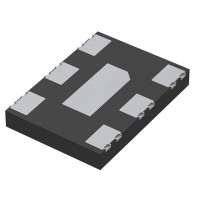
Incoming inspection best practices for this component should include a 3-phase approach. First, visual inspection per IPC-A-610 standards: check for package cracks, discoloration, or bent leads (the SIT3372 is a 6-pin QFN-style package). Second, electrical verification using a spectrum analyzer or frequency counter: measure output frequency, duty cycle (50% ±5% for LVDS), and rise/fall time (typically <400 ps). Third, perform a solderability test on a sample lot—MEMS oscillators have a gold-plated termination that should wet completely within 5 seconds at 245°C. For high-volume procurement, automated optical inspection (AOI) can be programmed to verify the part marking and orientation. A sample size of 20 pieces per lot (per MIL-STD-1916) is sufficient for normal quality levels, with tightened inspection if any non-conformance is found.
Storage and handling are critical to maintain the MEMS oscillator’s reliability. Despite MSL 1 rating, the devices should be stored in a clean, dry environment with a temperature range of -10°C to +40°C and relative humidity below 85% to prevent oxidation of termination pads. Anti-static precautions are mandatory: use conductive trays or ESD bags, and ensure all handling personnel wear grounded wrist straps. The device’s hermetically sealed MEMS cavity means it is resistant to outgassing and corrosion, but prolonged exposure to corrosive gases (e.g., chlorine, sulfur) should be avoided. For reflow soldering, follow SiTime’s recommended profile: peak temperature 260°C for 10 seconds maximum, with a ramp rate of 3°C/sec. Improper reflow can induce internal stress, shifting the output frequency permanently.
End-of-life (EOL) management and obsolescence planning for this MEMS VCXO require proactive strategies. SiTime typically provides a 12-month EOL notice with last-time buy (LTB) opportunities. Procurement should maintain a minimum 18-month stock buffer for critical applications, especially given the long lead times (12-16 weeks) for custom frequencies like 184.3200 MHz. Consider designing in a second-source MEMS oscillator or a pin-compatible alternative from SiTime’s own portfolio (e.g., the SIT3373 series with different pull range). For long-term support, request SiTime’s product longevity commitment—they often guarantee production for 10 years from the date of introduction. Additionally, archive the device’s qualification data and reliability reports in your system for future redesigns. Engage with SiTime’s field application engineers early to discuss die-level replacements or future product roadmaps, as MEMS technology evolves rapidly toward smaller packages and lower jitter.