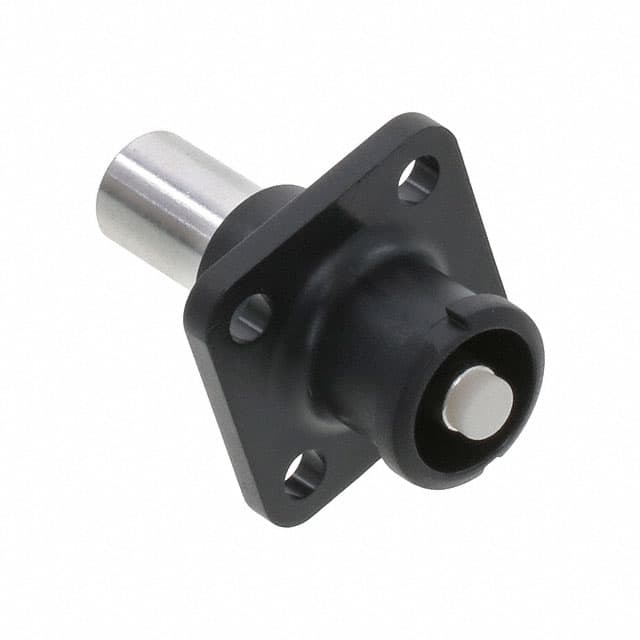
The SURLOK PLUS inline receptacle (SKU: SLPIRA16CPNB1) from Amphenol Industrial Operations is a high-current, IP67/IP68-rated interconnect designed for harsh environments, particularly in electric vehicles (EVs), energy storage, and industrial automation. Its reliability is not inherent but must be actively managed through a disciplined quality assurance program. This guide outlines the critical reliability and quality considerations for procurement and supply chain professionals.
Reliability Standards and Qualifications. This component is designed and tested in accordance with Amphenol’s internal specifications that align with industry standards such as USCAR-2 for automotive electrical connector systems and IEC 60512 for electromechanical components. Key qualification tests include mechanical shock and vibration (per IEC 60068-2-6 and -2-64), thermal cycling from -40°C to +125°C, and ingress protection testing per IEC 60529. The receptacle also meets UL 1977 for data, signal, and power connectors, and RoHS/REACH compliance. When procuring, demand the PPAP (Production Part Approval Process) documentation, including the DFMEA and control plan, to verify that the supplier’s manufacturing process is stable and capable.
Accelerated Life Testing and Results. Accelerated life testing (ALT) for this inline receptacle typically uses elevated temperature and humidity (e.g., 85°C/85% RH for 1000 hours) combined with continuous current load at rated amperage. The goal is to accelerate oxidation of the contact interface and degradation of the sealing grommet. Results are expressed as a time-to-failure distribution, often modeled using the Arrhenius equation. A successful ALT run shows no more than a 10% increase in contact resistance and no dielectric breakdown after the test. For a procurement engineer, this data indicates the expected useful life at nominal conditions; for instance, a 1000-hour test at 125°C may correlate to 10+ years at 60°C ambient. Always request the acceleration factor used, as it determines the validity of extrapolated life claims.
Failure Rate Calculations (FIT) and MTBF. The SURLOK PLUS is a passive component, so its failure rate is primarily driven by mechanical wear, contact fretting, and seal degradation. Typical FIT (Failures In Time) rates for this connector are between 5 and 20 FITs (failures per 10^9 device-hours) at a 60% confidence level, based on Telcordia SR-332 or MIL-HDBK-217 stress models. This translates to an MTBF of roughly 5.7 to 22.8 million hours. However, these figures assume a constant failure rate (the “bathtub curve” flat region) and do not account for infant mortality or wear-out. In practice, the connector’s MTBF is meaningless without considering mating cycles—Amphenol specifies a limited number of durability cycles (e.g., 50 to 100 matings) beyond which the contact force degrades. Use FIT data for system-level reliability predictions, but always de-rate current and temperature to stay within the connector’s derating curve to maintain those numbers.
Environmental Stress Screening and Burn-In. Incoming inspection should not rely on visual checks alone. For this sealed connector, perform environmental stress screening (ESS) on a sample basis: subject units to thermal shock (e.g., 10 cycles from -40°C to +125°C) followed by a 100-hour damp heat test at 40°C/93% RH to expose latent seal defects. Burn-in is generally not applicable for passive connectors, but a contact resistance measurement before and after thermal cycling is an effective screen. If the receptacle is supplied pre-wired with a cable, perform a hipot test at 1.5 kV DC for 1 minute to verify dielectric integrity. Any unit showing a >5% shift in contact resistance should be rejected as a latent failure risk.
Counterfeit Detection Methods. The SLPIRA16CPNB1 is a target for counterfeiting due to its high value. Implement a multi-layered detection protocol. First, verify the permanent laser marking: genuine Amphenol parts have a crisp, high-contrast alphanumeric code that cannot be scratched off with a fingernail. Second, use X-ray fluorescence (XRF) to confirm the contact plating is genuine gold or tin-silver over copper—counterfeits often use cheap nickel plating. Third, check the sealing grommet’s durometer (hardness) using a Shore A tester; genuine silicone grommets measure 50±5, while fakes are either too hard or too soft. Fourth, request a certificate of conformance from an authorized distributor and cross-reference the lot code with Amphenol’s database. For high-risk lots, send a sample to a third-party lab for scanning electron microscopy (SEM) of the contact interface to verify grain structure.
Incoming Inspection Best Practices. Upon receipt, quarantine the lot until inspection passes. Use a statistical sampling plan per ANSI/ASQ Z1.4 at General Inspection Level II, with an AQL of 0.65 for critical parameters (contact resistance, seal integrity) and 1.5 for appearance. Measure insertion force (should be within the spec range of 15-50 N) and contact resistance using a micro-ohmmeter at 10 mA, expecting less than 5 mΩ per contact. Inspect the IP68 sealing cap for damage—any nicks on the grommet surface are grounds for rejection. Also verify dimensional tolerances using go/no-go gauges for the key slot and locking tang. Document all results in a lot-specific record to trace failures back to the supplier’s batch.
Storage and Handling Requirements. To maintain reliability, store the receptacles in their original anti-static, moisture-barrier bags at 15-35°C and 30-70% RH. Do not expose to direct sunlight or ozone, which degrades the silicone seal. Shelf life is typically 24 months from date of code; after that, re-qualify the seal via a compression set test. Handle with clean, lint-free gloves—skin oils can accelerate contact corrosion. Avoid dropping or impacting the receptacle, as internal contact alignment is precise. If the connector has been mated, always cap it with the provided dust cover to prevent debris ingress.
End-of-Life Management and Obsolescence Planning. Amphenol provides product change notifications (PCNs) with a minimum 6-month lead time for discontinuation. As a buyer, monitor the lifecycle status on Amphenol’s portal. Because this is a high-volume EV part, obsolescence is unlikely short-term, but plan for last-time buy (LTB) quantities covering at least 2 years of forward production. Alternatively, identify a form-fit-function replacement from the same SURLOK PLUS series, ensuring the new part has identical mating length and current rating. Maintain a risk inventory buffer for critical applications, but re-certify stock older than 5 years before use. Finally, include a supplier agreement clause requiring Amphenol to provide a 10-year spare parts availability commitment for active SKUs, and archive all qualification data in a secure repository for future audits.
SURLOK PLUS, INLINE RECEPTACLE,
Amphenol Industrial Operations | SLPIRA16CPNB1 | $15.21